

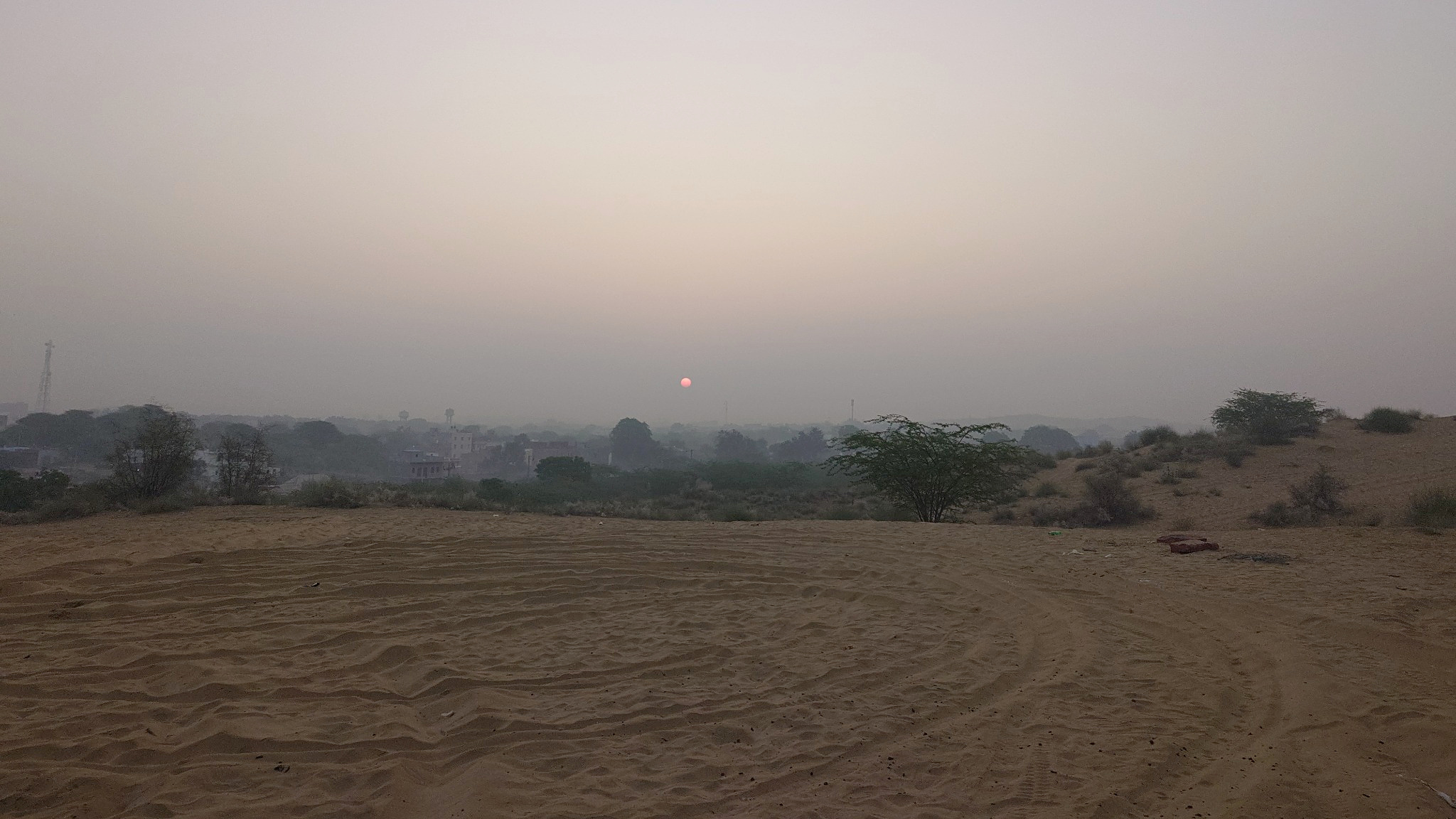
Being from Jodhpur, I've always had an interest in exploring the historical towns scattered across western Rajasthan. Some are well known among travellers, while others receive relatively little attention despite having plenty to offer. Osian, about 65 kilometres north of Jodhpur, is one of those places.
Often referred to as the Bhubaneswar of Rajasthan, Osian is known for its centuries-old Hindu and Jain temples, many of which date back to the eighth through twelfth centuries. The temples are spread across a small town where religious activity continues alongside everyday life. Beyond the settlement, the landscape gradually gives way to sand dunes, offering something quite different from the historic architecture.
I travelled to Osian by an early-morning bus from Jodhpur, keen to explore its old temples and the surrounding landscape. If you enjoy history, temple architecture or simply discovering places beyond Rajasthan's more familiar tourist destinations, Osian makes an interesting day trip from Jodhpur.
Why Is Osian Called the Bhubaneswar of Rajasthan?
Osian earned the nickname Bhubaneswar of Rajasthan because of its collection of ancient temples, drawing a comparison with Bhubaneswar in Odisha, another city celebrated for its temple architecture. During the early medieval period, Osian was an important centre of religion and trade, and several remarkable temples were constructed here between the eighth and twelfth centuries.
What makes Osian interesting is that these temples aren't all confined to a single monument complex. Some are active places of worship, while others survive as historic structures among the houses and streets of the town. Their carved pillars, decorative gateways and sandstone towers offer a glimpse into the architectural traditions that flourished in this part of Rajasthan centuries ago.
Places to Visit in Osian
Sachiya Mata Temple
One of Osian's most important religious landmarks is the Sachiya Mata Temple, situated on a hill overlooking the town. The temple attracts devotees throughout the year and is particularly significant during Navratri.
Reaching the main shrine involves climbing a series of steps through beautifully carved gateways. The approach itself is worth paying attention to, with decorated arches, stone pillars and architectural details appearing at different levels of the climb.
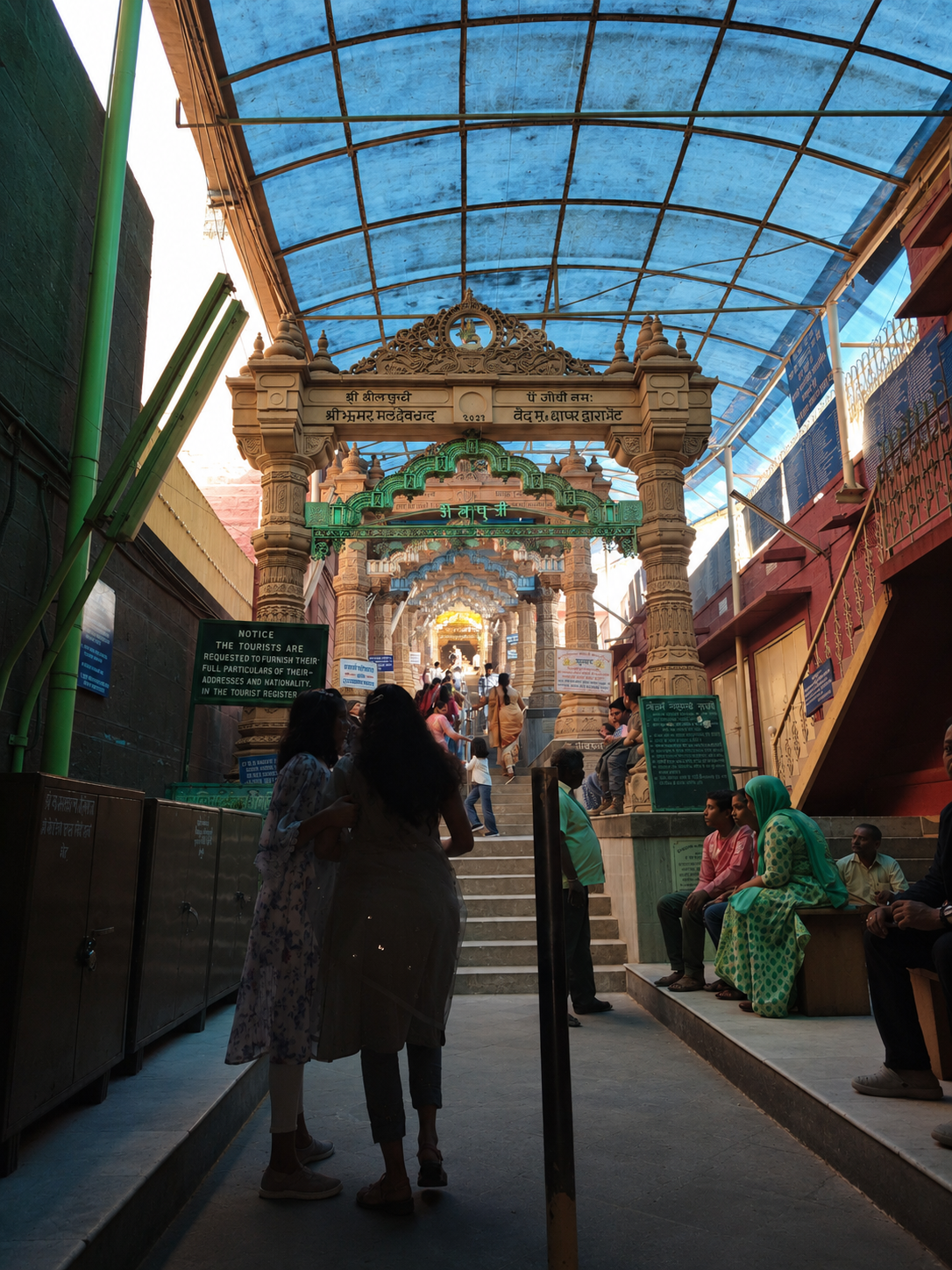
As you make your way towards the shrine, the covered passage and successive gateways provide plenty of opportunities to appreciate the craftsmanship. It is an active temple, so expect to share the approach with devotees coming for darshan, particularly during festivals and religious occasions.
From the higher sections of the complex, you can also look out over Osian. Smaller temple towers and the surrounding buildings are visible below, with the landscape stretching beyond the town.
There are quite a few steps to negotiate, so visitors travelling with elderly family members or anyone with mobility difficulties should check the available access arrangements. If you're visiting during Navratri, allow extra time for the crowds.
Mahavira Jain Temple
Osian also has a strong association with the Oswal Jain community, and the Mahavira Jain Temple is one of the town's most significant historic monuments. Dedicated to Lord Mahavira, the twenty-fourth Jain Tirthankara, the temple has origins dating to the late eighth century, although parts of the complex have been altered or restored over time.
The architecture is the main reason to spend time here. Its carved pillars, gateways and halls display the intricate stonework associated with early medieval temple construction in western India. Even if you're not particularly familiar with Jain architecture, the decorative details are worth examining closely.
As this remains a place of worship, follow the temple's rules regarding footwear, photography and access to the shrine.
Sun Temple
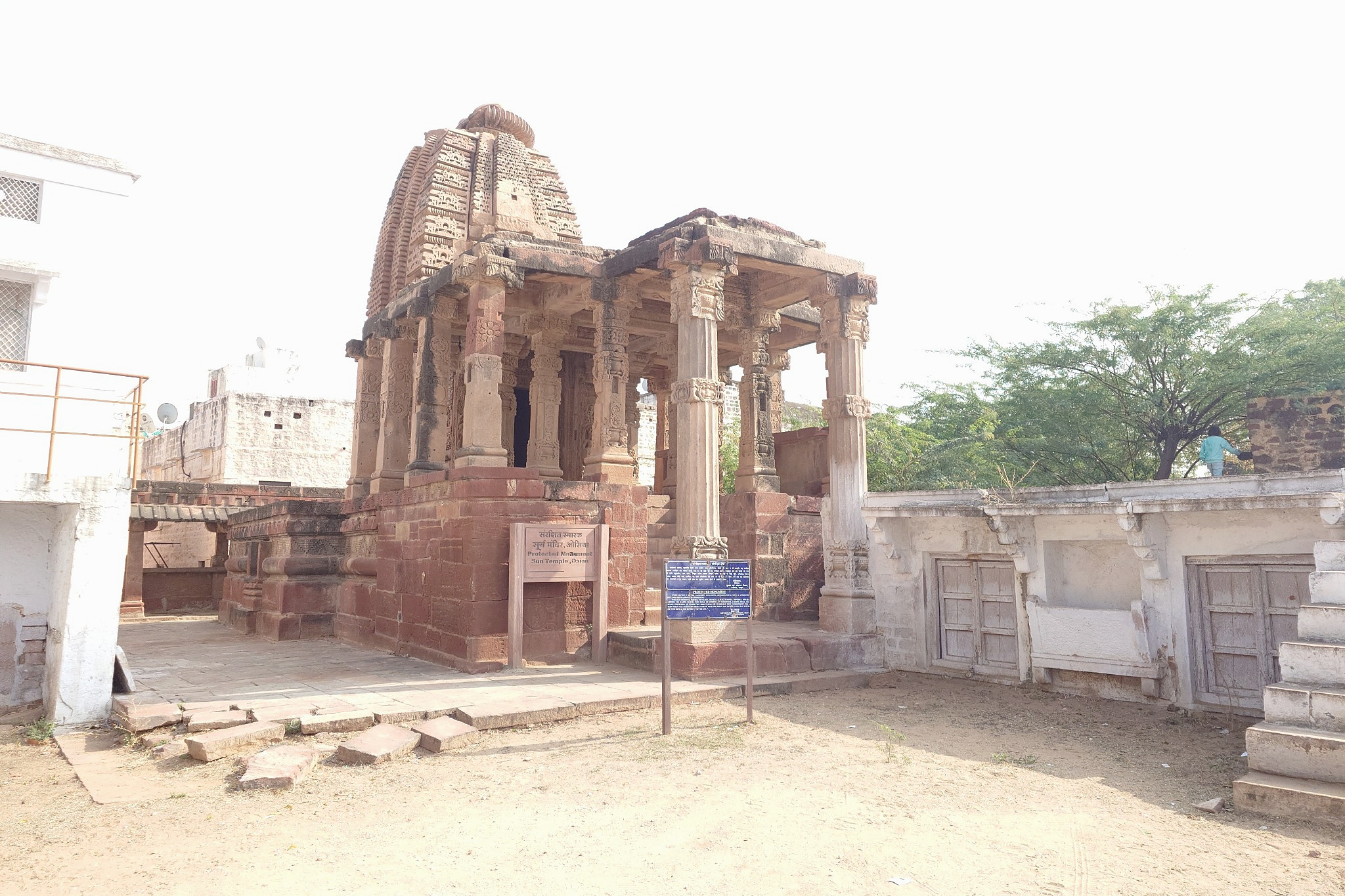
The Sun Temple is another interesting stop while exploring Osian's historic streets. Compared with the larger religious complexes, it is relatively compact, but its sandstone architecture and surviving carvings make it worth visiting.
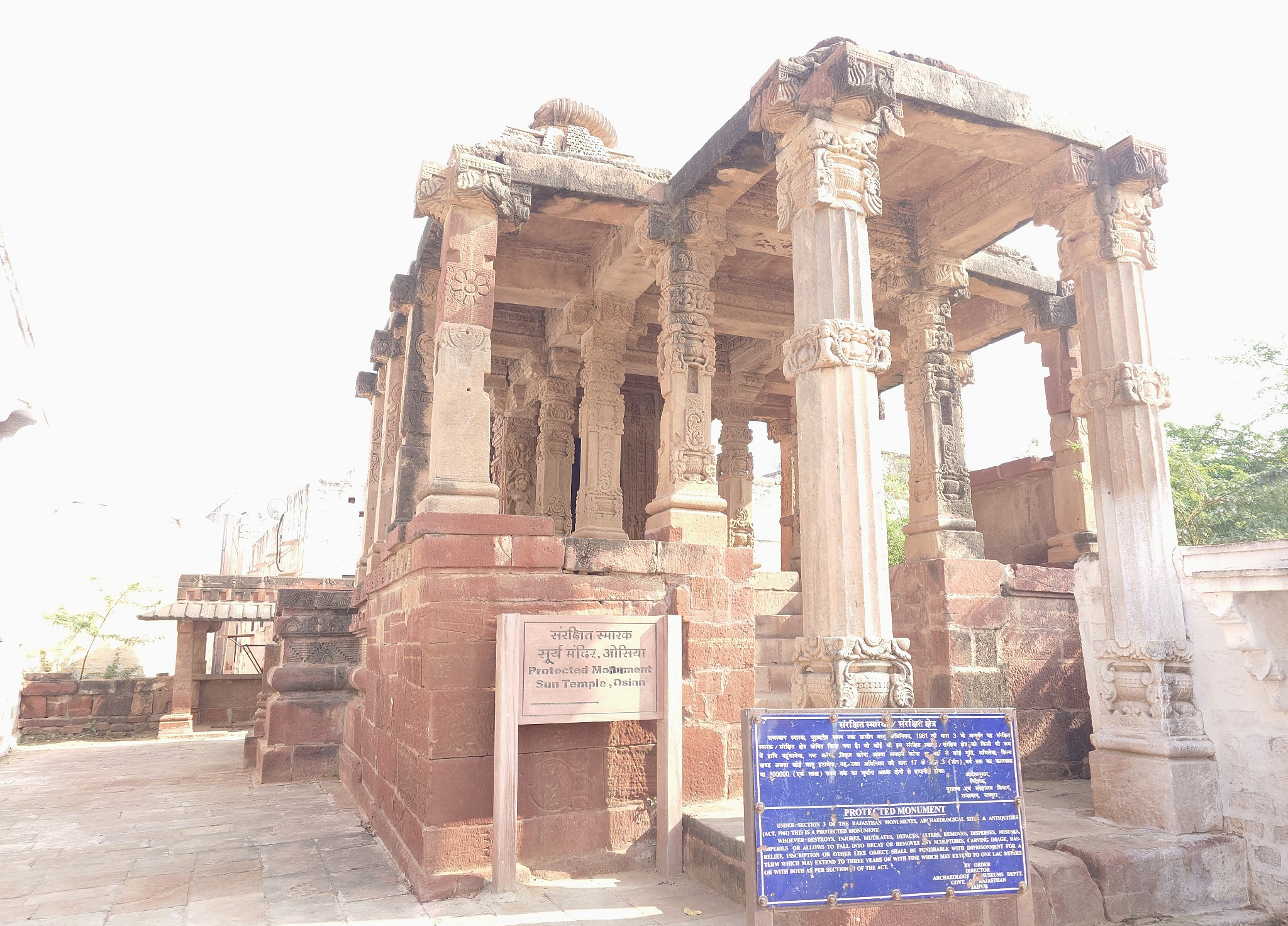
The pillared porch is particularly attractive, with decorative bands running along the columns and carved stone beams supporting the structure above. The entrance lies behind the porch, and the contrast between the shaded interior and the sunlit sandstone makes the architectural details stand out.
Take a little time to look at the carvings rather than treating it as a quick photograph stop. The temple is a good example of how much detail Osian's builders incorporated into relatively small structures.
Piplad Mata Temple and the Harihara Temples
Beyond the better-known shrines, Osian has several smaller historic temples that are worth seeking out if you enjoy exploring old architecture.
The Piplad Mata Temple stands on a raised sandstone platform, with carved columns and a pillared entrance. Religious flags and garlands add colour to the old stonework, reflecting its continued importance as a place of worship.
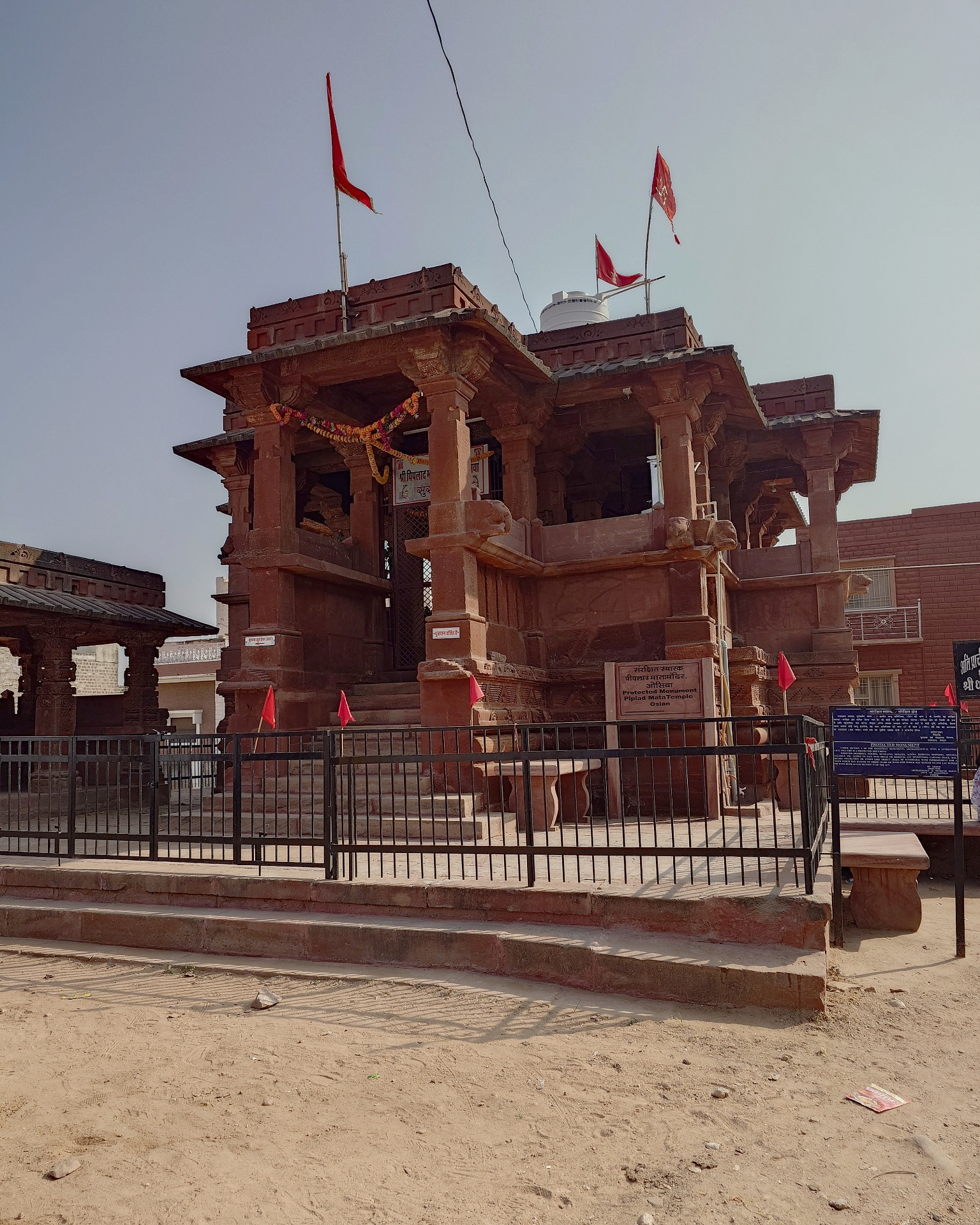
The Harihara temples are another important part of Osian's architectural heritage. Dedicated to Harihara, a combined form of Shiva and Vishnu, these early temples are notable for their sculptural details and historic significance.
Some of the older structures have lost portions of their original architecture, while others retain carved entrances, pillars and open halls. Their condition varies, but there's still plenty to appreciate in the surviving stonework.
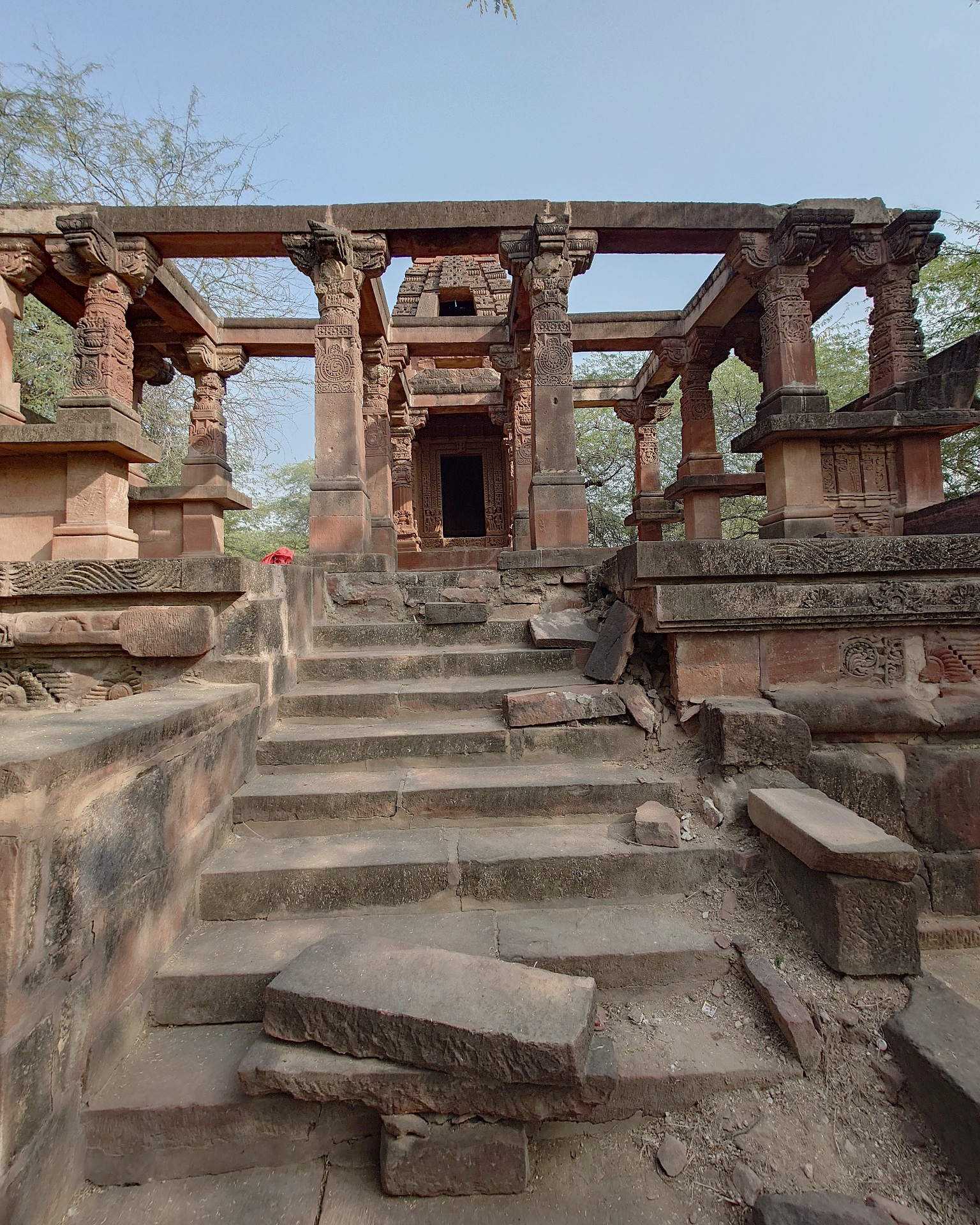
These smaller temples are particularly interesting because they offer a chance to explore beyond Osian's principal pilgrimage attractions. If you're having trouble locating individual monuments, asking locally can be more useful than relying entirely on a map.
You can also enquire about the Jalara or Jhalara Baori, a historic stepwell associated with the town. Check its current condition and accessibility before making a separate detour.
Exploring the Sand Dunes of Osian
Osian isn't only about temples. Just beyond the town are stretches of sand dunes, scrubland and open countryside that offer a different experience from exploring its historic streets.
Camel rides, jeep excursions and desert camps are available through local operators, particularly for visitors interested in a sunset outing. However, you don't necessarily need to book a safari to enjoy the landscape.
During my visit, I explored three sand dunes on foot, without taking a camel or jeep ride. Walking across the sand was enjoyable in its own way, although climbing loose dunes requires considerably more effort than walking on an ordinary path.
The landscape around Osian is different from the vast dune fields many travellers associate with Jaisalmer. You'll find sand interspersed with scrub, vegetation and occasional signs of settlement, so it's worth approaching the experience with realistic expectations.
Early morning is particularly pleasant for exploring the dunes, with softer light and generally more comfortable temperatures. Late afternoon is another good option, especially if you're interested in sunset photography.
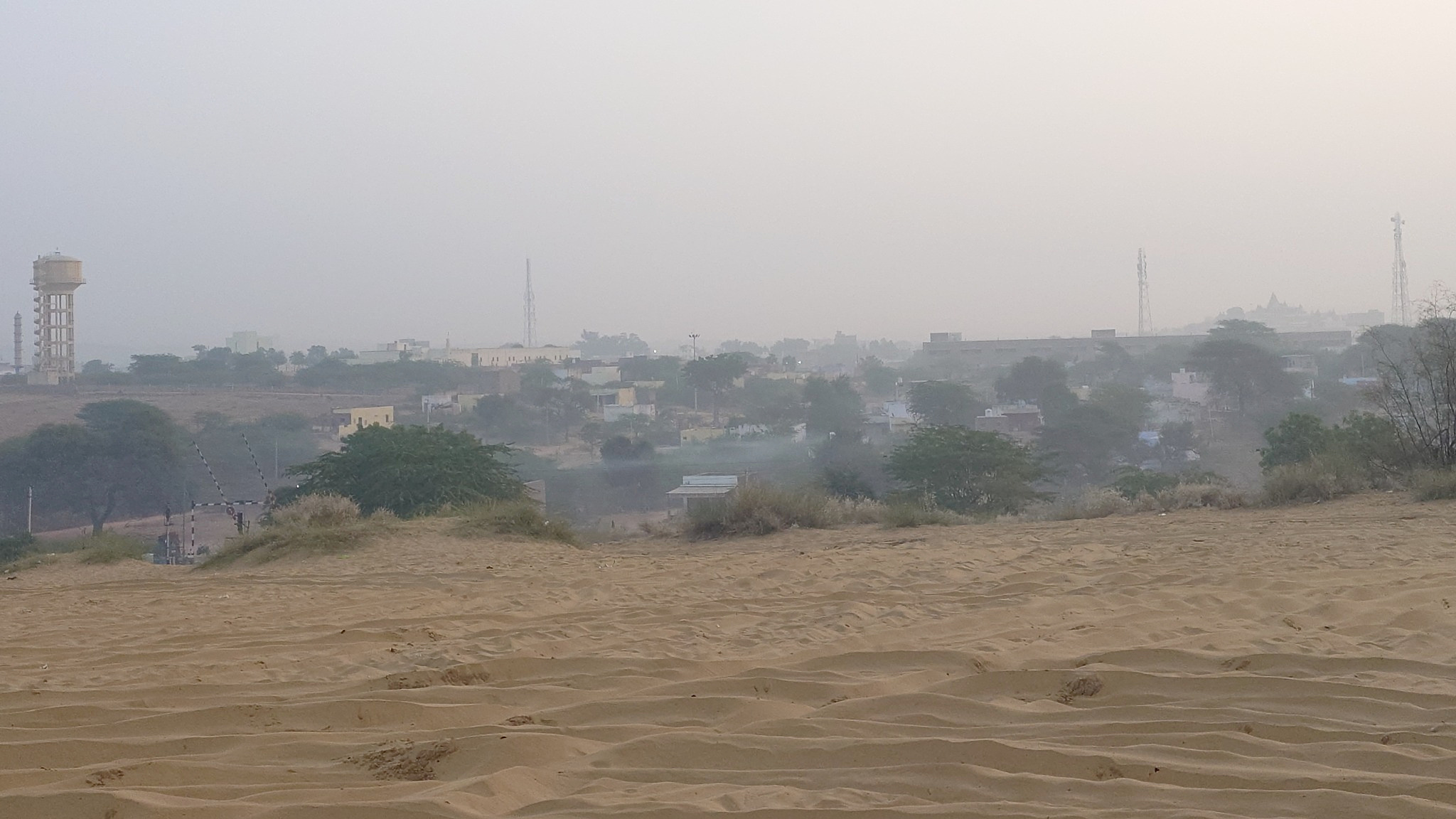
If you're planning to explore independently, carry enough water, avoid walking too far into unfamiliar areas and leave sufficient time to return. For organised camel or jeep excursions, confirm the route, duration, transport arrangements and total price before booking.
Best Time to Visit Osian
The best time to visit Osian is generally October to March, when the weather is more suitable for walking around temples and exploring the surrounding dunes. November to February is particularly comfortable, although early mornings and evenings can be quite cold during winter.
Summers in western Rajasthan can be extremely hot, and many of Osian's temples and dunes offer little protection from the afternoon sun. If you're visiting during warmer months, start early and avoid spending too much time outdoors during the hottest part of the day.
Religious festivals, particularly Navratri, can bring larger crowds to Sachiya Mata Temple. Whether that's a positive or negative depends on the kind of experience you're looking for. Visiting outside major festivals generally makes it easier to explore the architecture at a relaxed pace.
How to Reach Osian from Jodhpur
Osian lies approximately 65 kilometres north of Jodhpur, along the Jodhpur–Phalodi road. It is accessible by road and rail, making it a relatively straightforward excursion from the city.
I travelled by an early-morning bus from Jodhpur, and the journey took approximately two hours. Buses are a practical option if you're travelling independently and don't want to hire a vehicle.
By bus: Bus services connect Jodhpur with Osian. Confirm the departure point, route and return timings before travelling, particularly if you're planning to remain in Osian until late afternoon or evening.
By train: Osian has its own railway station, Osiyan (OSN), on the Jodhpur–Jaisalmer railway route. Check current services and whether your preferred train stops at Osiyan through Indian Railways or IRCTC.
By private taxi: Hiring a cab from Jodhpur is convenient if you're travelling with family or want the flexibility to visit the temples and dunes without depending on local transport. Agree on the return fare and waiting arrangements beforehand.
By air: Osian doesn't have an airport. The nearest is Jodhpur Airport (JDH), from where you can travel by road to Osian or continue through Jodhpur.
Once in town, several temples can be explored on foot, although the distances between individual sites may vary. The sand dunes are outside the main settlement, so you may need local transport depending on which area you intend to visit.
How Much Time Do You Need in Osian?
A full day is generally enough to visit Osian's principal temples and spend some time exploring the dunes. If you're staying in Jodhpur, you can comfortably plan Osian as a day trip without needing to arrange overnight accommodation.
However, if you're interested in photography, want to spend more time exploring the smaller temples or would like to experience both sunrise and sunset among the dunes, staying overnight may be worthwhile.
Where to Stay in Osian
You don't necessarily need to stay in Osian, particularly if you're already based in Jodhpur. The distance makes a day trip practical, and Jodhpur offers a much wider range of accommodation.
For an overnight visit, Osian has hotels and desert camps catering to travellers who want to spend more time around the dunes. Staying in town may be more convenient for visiting the temples, while a desert camp generally places greater emphasis on the outdoor experience.
Before booking a camp, check exactly what's included in the price. Meals, transport, camel rides, jeep excursions and evening performances may be charged separately. If you prefer a quieter stay, it's worth asking whether the property hosts music or other activities in the evening.
Where to Eat in Osian
Osian has local restaurants and dhabas where you can find simple vegetarian meals, particularly around the market and temple areas. Dal, roti, seasonal vegetables and other familiar Rajasthani dishes are practical options while exploring the town.
If you have specific dietary requirements, including Jain food preferences, communicate them when ordering rather than assuming every vegetarian establishment follows the same preparation practices.
For visitors staying in desert camps, confirm whether meals are included with the accommodation. This can save you from having to arrange additional transport into town for dinner.
A Few Things to Know Before Visiting Osian
Osian is both a historic town and an active religious destination, so it's worth remembering that several of its temples continue to serve local communities and pilgrims. Dress appropriately, remove footwear where required and ask before photographing shrine interiors or religious ceremonies.
Comfortable footwear is useful for exploring the town, particularly around older temples with uneven steps and stone surfaces. Carry drinking water and sun protection, especially if you plan to spend time among the dunes.
If you're relying on buses or trains, check the return journey before heading out. Transport arrangements become more important if you're planning to stay until sunset, as the dunes are outside the main town and may require a separate ride.
Final Thoughts on Visiting Osian
Osian is an interesting place to explore if you're visiting Jodhpur and want to see something beyond the city's better-known attractions. Its historic temples offer a look at the architecture and religious traditions of early medieval Rajasthan, while the surrounding dunes provide a change of scenery.
What I particularly like about Osian is the combination of its ancient temples and the surrounding landscape. You can spend part of the day examining centuries-old sandstone carvings and the rest walking among the dunes, without needing to travel particularly far from Jodhpur.
For anyone who enjoys historical towns, temple architecture and exploring lesser-known places in Rajasthan, Osian is well worth adding to a Jodhpur trip.